 ENG
ENG
 INA
INA
Boosting Herbal Tourism Potential: Udayana Community Service Team Trains Sanda Village’s PKK and STT to Process Local Medicinal Plants
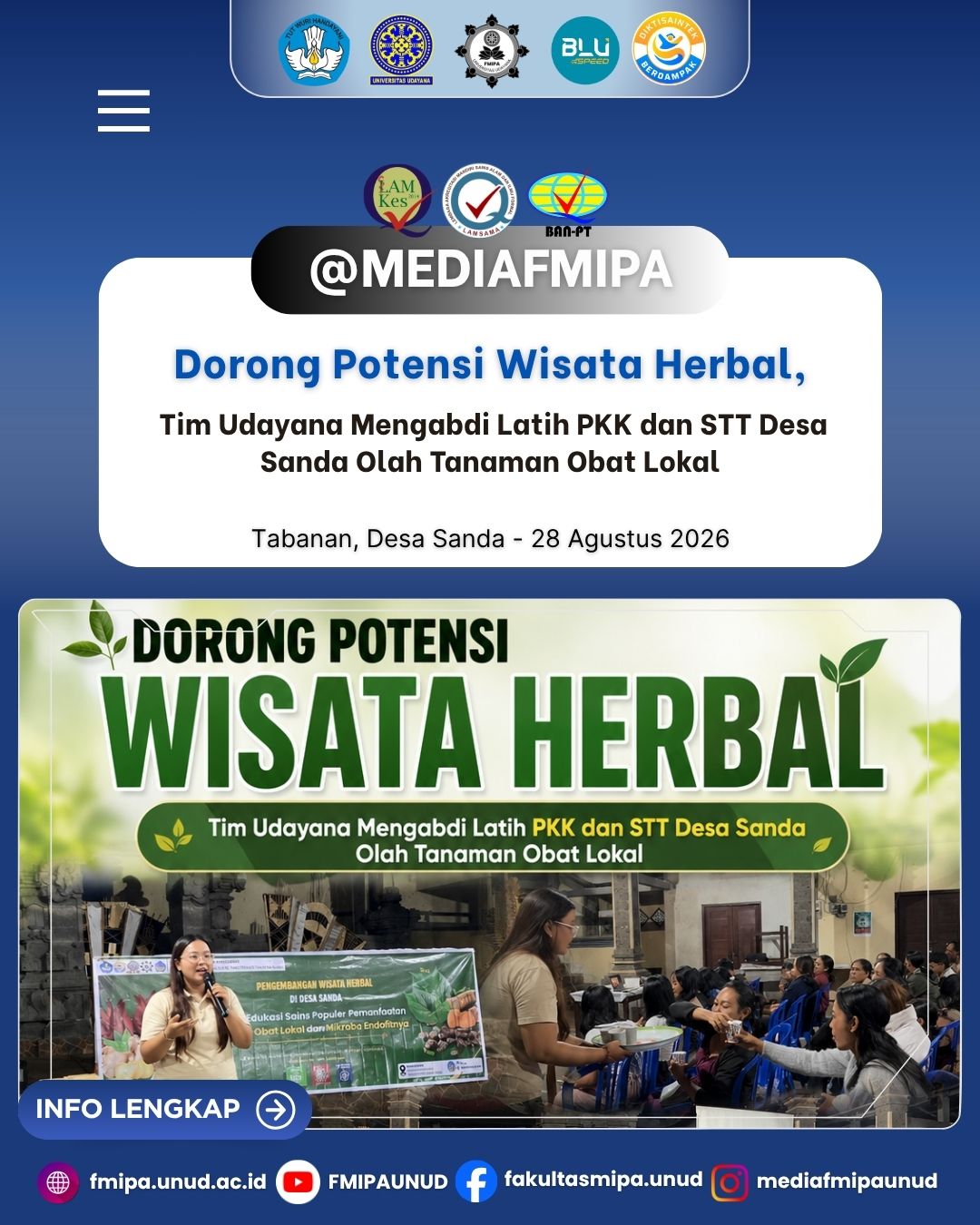
SANDA, BALI — A community service team from Udayana University successfully conducted the "Udayana Mengabdi" (Udayana Serves) 2026 program in Sanda Village on Friday, August 28, 2026. Centered on the theme "Developing Herbal Tourism in Sanda Village through Popular Science Education on the Use of Local Medicinal Plants and Their Endophytic Microbes," the event aimed to strengthen Sanda Village's potential as a herbal tourism destination grounded in both local wisdom and science.
The event was officially opened by the Head of Sanda Village, I Wayan Susana, A.Md. In his remarks, he warmly welcomed the service team and expressed his appreciation and support for local community empowerment, particularly among women's groups and the youth. He emphasized that the active involvement of the PKK (Family Welfare Empowerment) women in processing local medicinal plants plays a strategic role in supporting Sanda Village's development into a sustainable herbal tourism destination.
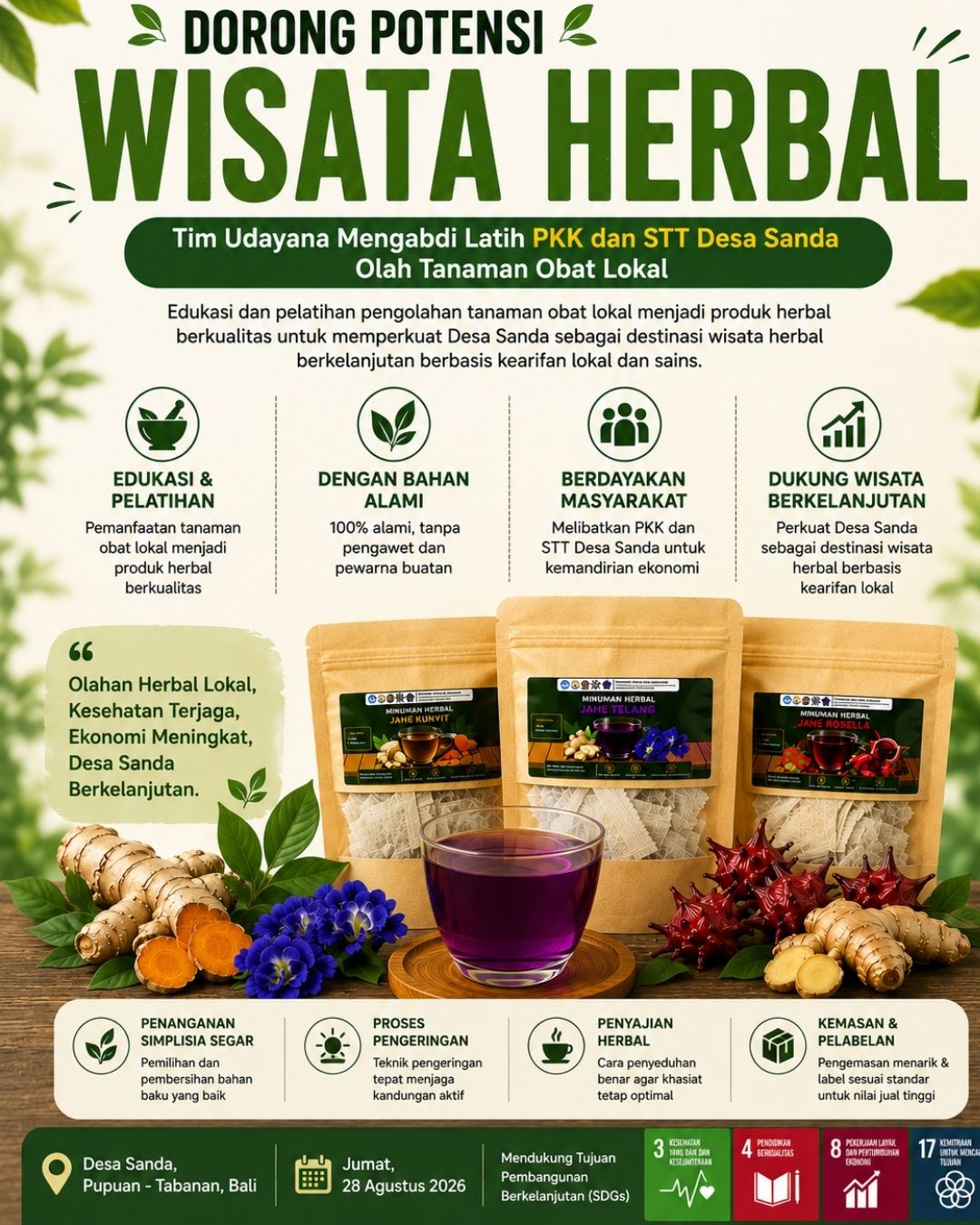
The event's organizing chair, Dr. rer. nat. apt. Ni Putu Ariantari, S.Farm., M.Farm., also served as the resource person. Through a presentation designed to be interactive and accessible via popular science, participants were invited to gain a deeper understanding of the diverse medicinal plants native to the Sanda Village area, such as ginger, turmeric, betel leaf, lemongrass, roselle, and coffee. The education covered not only the use of single ingredients but also innovative and beneficial herbal combination formulas—such as ginger-roselle, turmeric-ginger, and ginger-butterfly pea flower blends. The activity also involved Pharmacy students and lecturers from the Faculty of Mathematics and Natural Sciences (FMIPA) at Udayana University. During the technical training session, participants—comprising PKK women and representatives from the village youth organization (*Sekaa Truna Truni* or STT)—were equipped with a comprehensive understanding of:
- Handling Fresh Raw Materials (*Simplisia*):
Selecting and cleaning high-quality raw materials.
- Drying Process:
Proper drying techniques to preserve the plants' active chemical compounds.
- Herbal Preparation:
Correct brewing methods to ensure optimal health benefits.
- Packaging & Labeling:
Implementation of attractive packaging strategies and standards-compliant labeling to enhance the product's market value.
Through this training, the community of Sanda Village is expected to produce high-quality herbal products ready for the market as signature souvenirs for the local herbal tourism destination. This 2026 PUM initiative is designed to support four SDGs: SDG 3 (Good Health and Well-being), SDG 4 (Quality Education), SDG 8 (Decent Work and Economic Growth), and SDG 17 (Partnerships for the Goals).
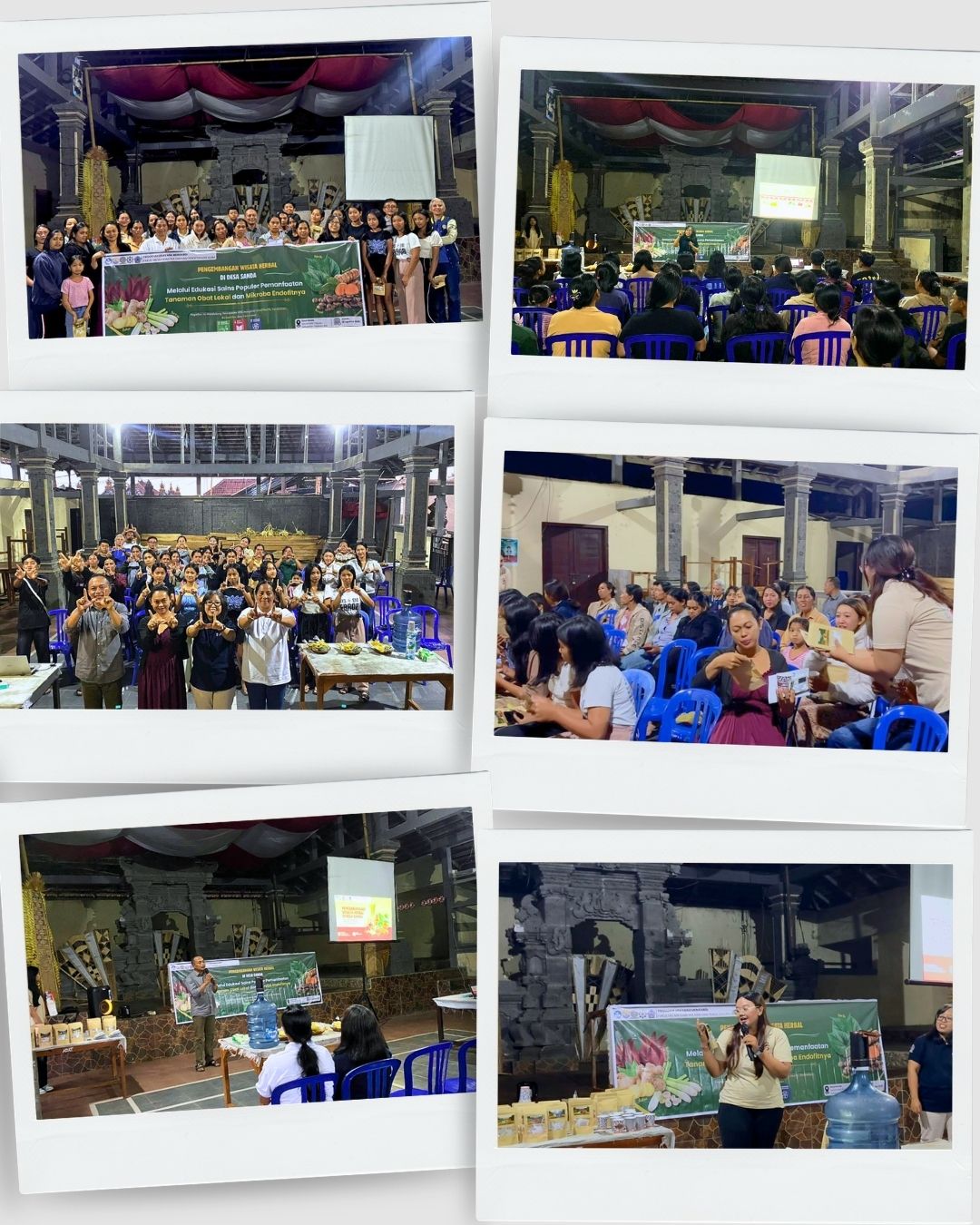
Gallery
UDAYANA UNIVERSITY