 ENG
 INA
Public Lecture for the Master’s Program in Pharmacy, Faculty of Mathematics and Natural Sciences (FMIPA), Udayana University, Discusses Innovations in Natural-Ingredient-Based Cosmeceuticals
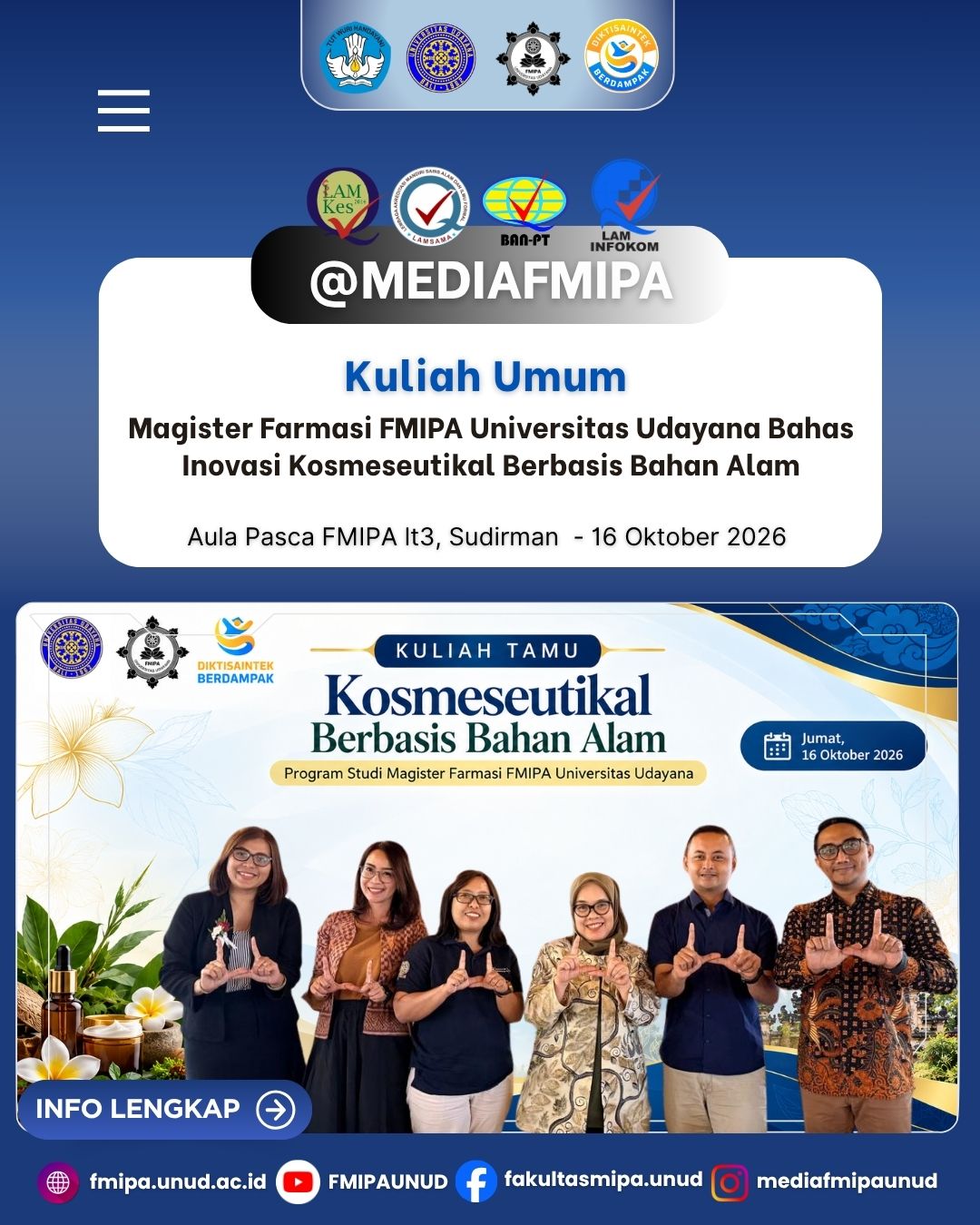
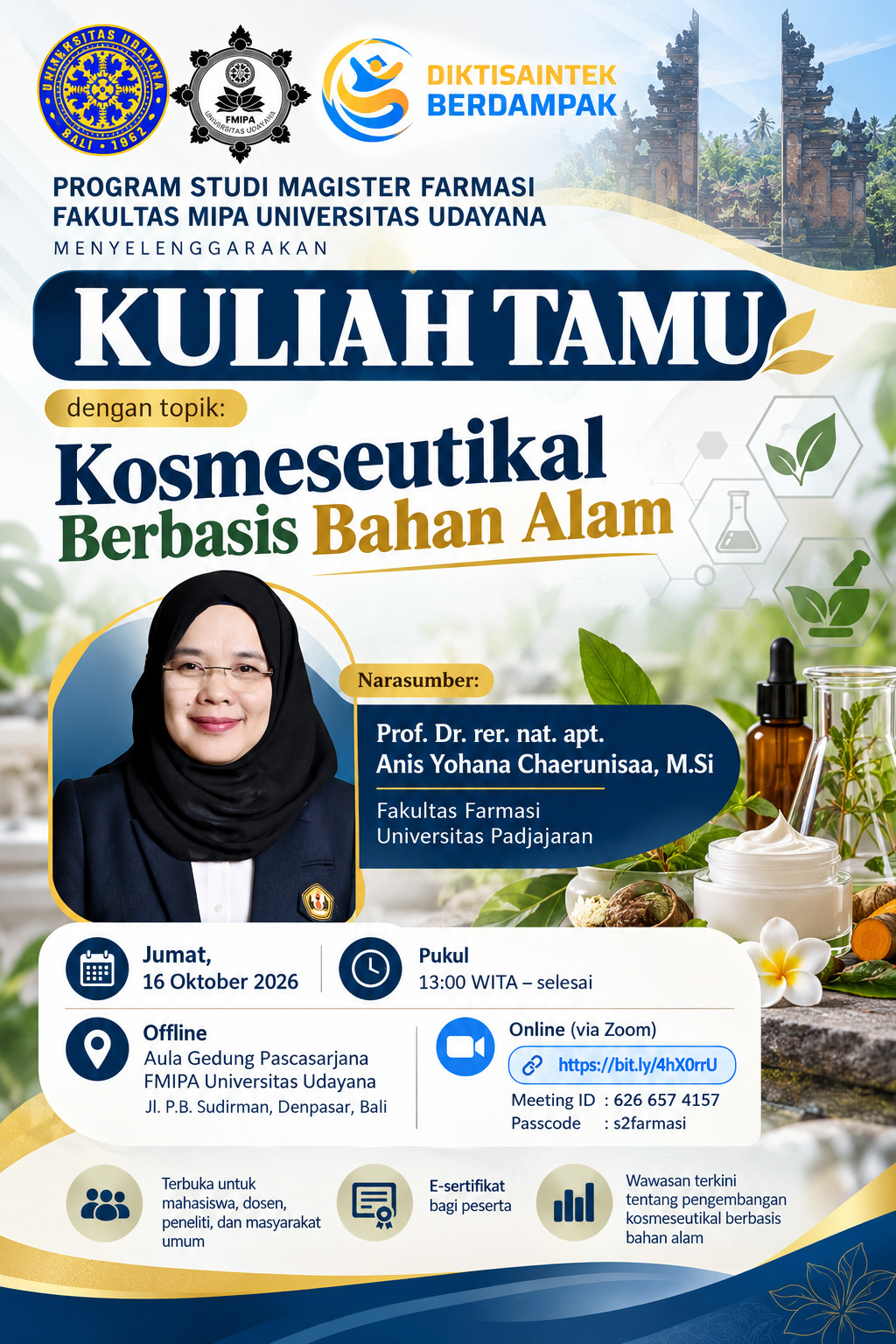
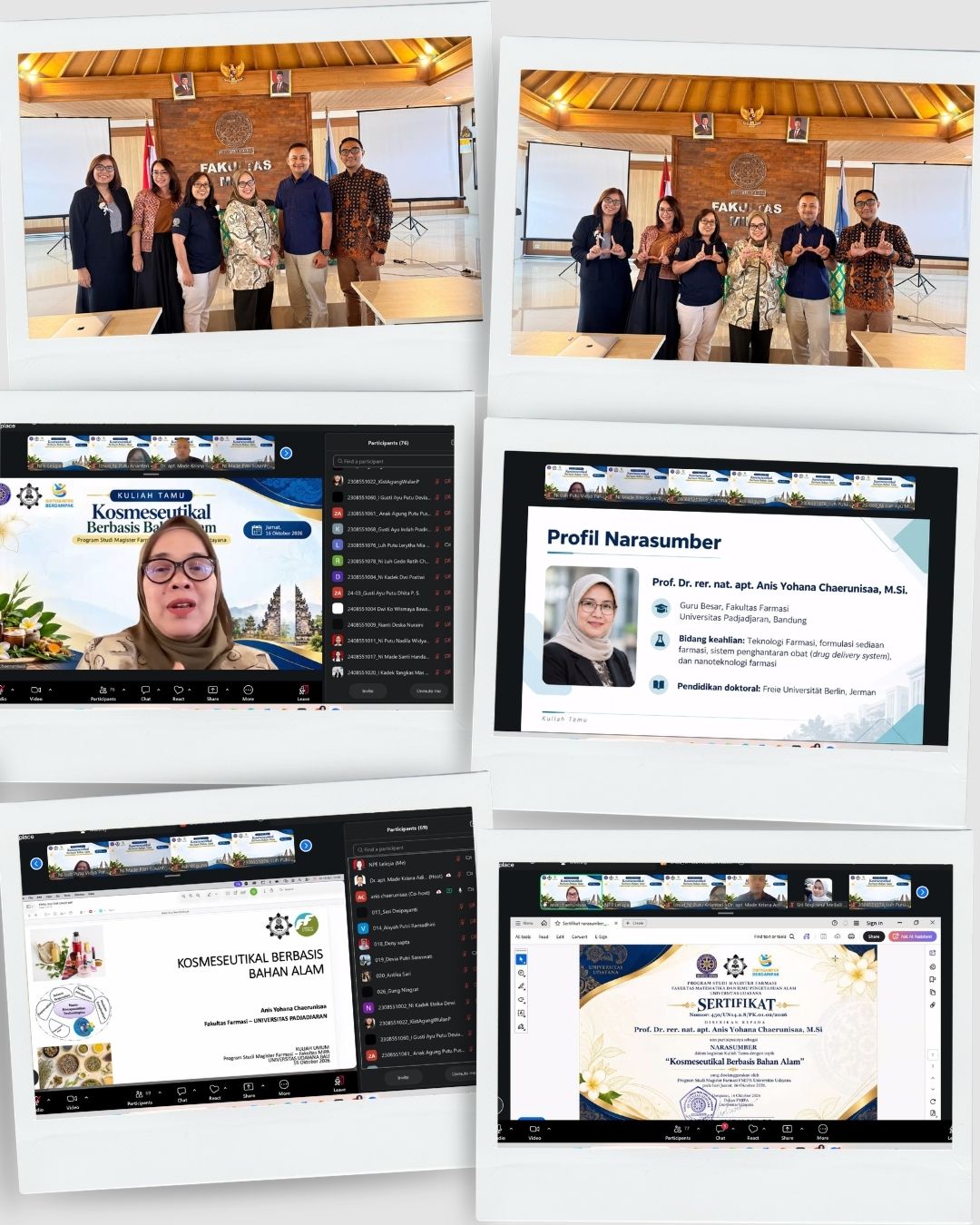
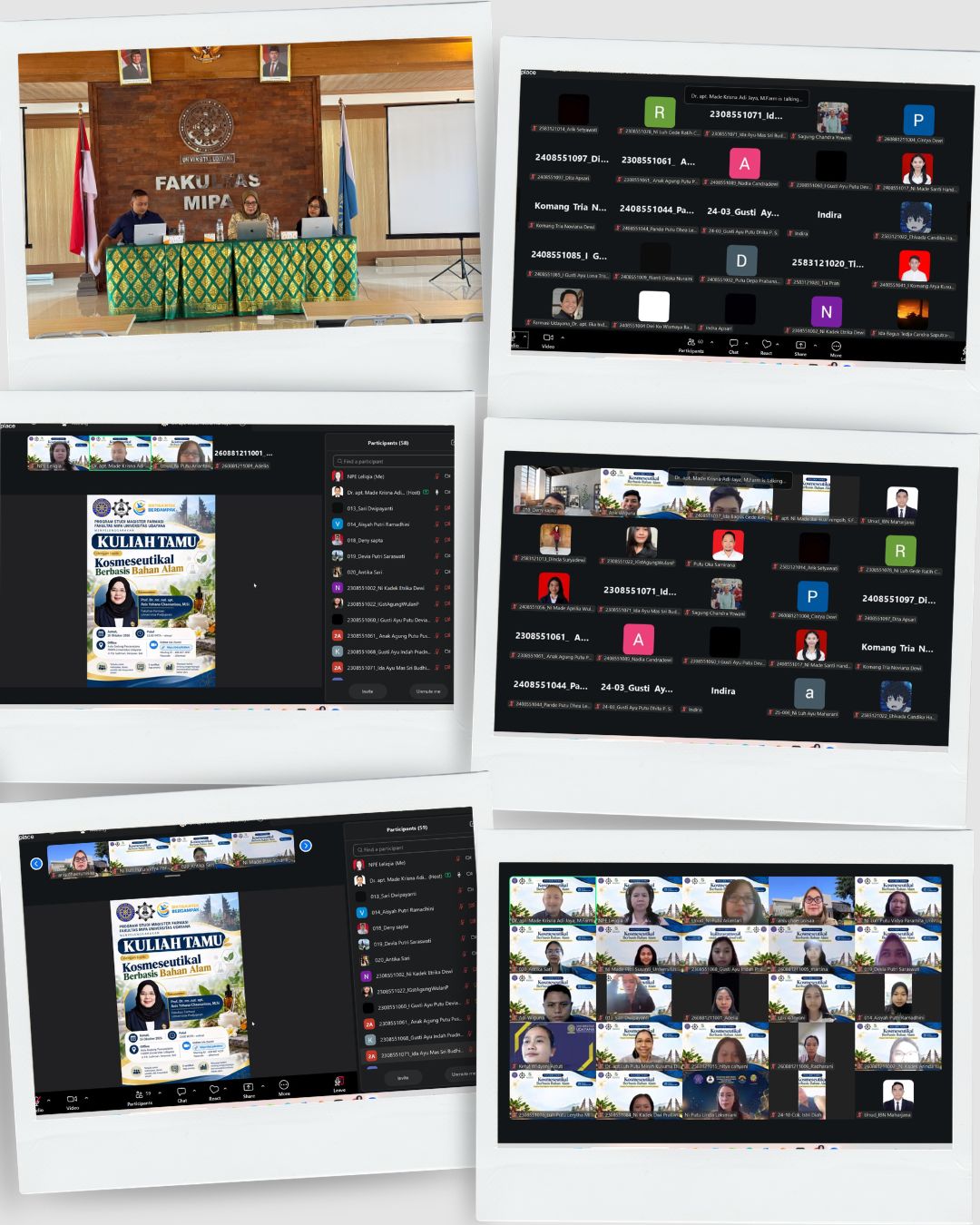
Denpasar, October 16, 2026 — The Master’s Program in Pharmacy at the Faculty of Mathematics and Natural Sciences (FMIPA), Udayana University, held a public lecture themed “Natural-Based Cosmeceuticals” on Friday, October 16, 2026. The event was conducted in a hybrid format, allowing participants to attend either in person or online.
The public lecture featured Prof. Dr. rer. nat. apt. Anis Yohana Chaerunisa, M.Si., from the Faculty of Pharmacy at Padjadjaran University as the guest speaker, with Dr. apt. I Made Krisna Adi Jaya, S.Farm., M.Farm.Klin., serving as the moderator. This event served as an academic platform to broaden students' understanding of research developments in natural-based cosmeceuticals, while also encouraging the creation of pharmaceutical innovations grounded in scientific evidence.
The event began with an introduction to the Master’s Program in Pharmacy at FMIPA, Udayana University, presented by the Program Coordinator, Dr. rer. nat. apt. Ni Putu Ariantari, S.Farm., M.Farm. During her presentation, she outlined the program’s vision, mission, and key strengths. This session also highlighted how the public lecture aligns with the program’s strategic direction—specifically in strengthening research-based education, fostering pharmaceutical innovation, and leveraging the potential of natural resources in a scientific and sustainable manner.
In the main session, Prof. Dr. rer. nat. apt. Anis Yohana Chaerunisa discussed advancements in the science and research of natural-based cosmeceuticals. Her presentation covered the dynamics of the global cosmeceutical market, the potential of Indonesia’s biodiversity as a source of bioactive compounds, and opportunities for academic research that offers scientific novelty while remaining relevant to industry needs. The speaker outlined various research opportunities for natural-based cosmeceuticals designed to provide moisturizing, skin-brightening, anti-aging, anti-acne, and anti-wrinkle benefits. Such development can be pursued through the study of molecular mechanisms, *in vitro* and *ex vivo* biological activity testing, and the application of formulation technologies and active-ingredient delivery systems—including nanoparticle-based technologies—to enhance stability, bioavailability, and the targeted delivery of active compounds.
The potential of Indonesia’s rich biodiversity—including endemic plants from Bali and marine biological resources—was also a key focus of the lecture. Utilizing these natural materials offers an opportunity to integrate traditional knowledge with modern research approaches. Through the standardization of raw materials, identification of marker compounds, characterization of biological activities, and formulation development, local resources can be studied systematically to create scientifically robust cosmeceutical innovations.
Beyond these opportunities, the speaker highlighted several challenges in developing natural-based cosmeceuticals, such as ensuring quality consistency and raw material standardization, identifying and quantifying active compounds, managing biodiversity-related variability, securing sufficient supplies for large-scale production, and meeting safety and regulatory requirements. These factors underscore that the development of cosmeceutical products requires a multidisciplinary approach that bridges laboratory research with product development and industrial needs.
The presentation also provided an overview of research stages applicable to master’s thesis projects—ranging from the exploration of ethnopharmacology and biodiversity, the extraction and standardization of natural materials, and the development of delivery systems for active ingredients, to the validation of efficacy and safety, as well as the planning of product prototype development. This framework offers students a perspective for designing research that not only possesses scientific novelty but also holds the potential to yield outcomes relevant to both society and the industry. The implementation of this public lecture aligns with the efforts of the Master’s Program in Pharmacy at the Faculty of Mathematics and Natural Sciences (FMIPA), Udayana University, to strengthen the quality of education and research culture. It encourages students to develop innovative and contextual pharmaceutical research, with a focus on the responsible utilization of natural resources. Furthermore, the event broadens perspectives on the importance of academic collaboration in addressing challenges related to research and the development of cosmeceutical products.
This public lecture supports the achievement of SDG 4: Quality Education, by providing a learning experience that enriches students' knowledge, connects participants with experts in the field, and fosters the development of research competencies and a commitment to lifelong learning.
Additionally, the event contributes to SDG 17: Partnerships for the Goals, through the exchange of knowledge and the strengthening of academic networks between Udayana University and Padjadjaran University. Such academic collaboration is expected to open...
Gallery
UDAYANA UNIVERSITY