 ENG
ENG
 INA
INA
When AI Meets the Sea: An International Team Empowers Bali's Coastal Communities
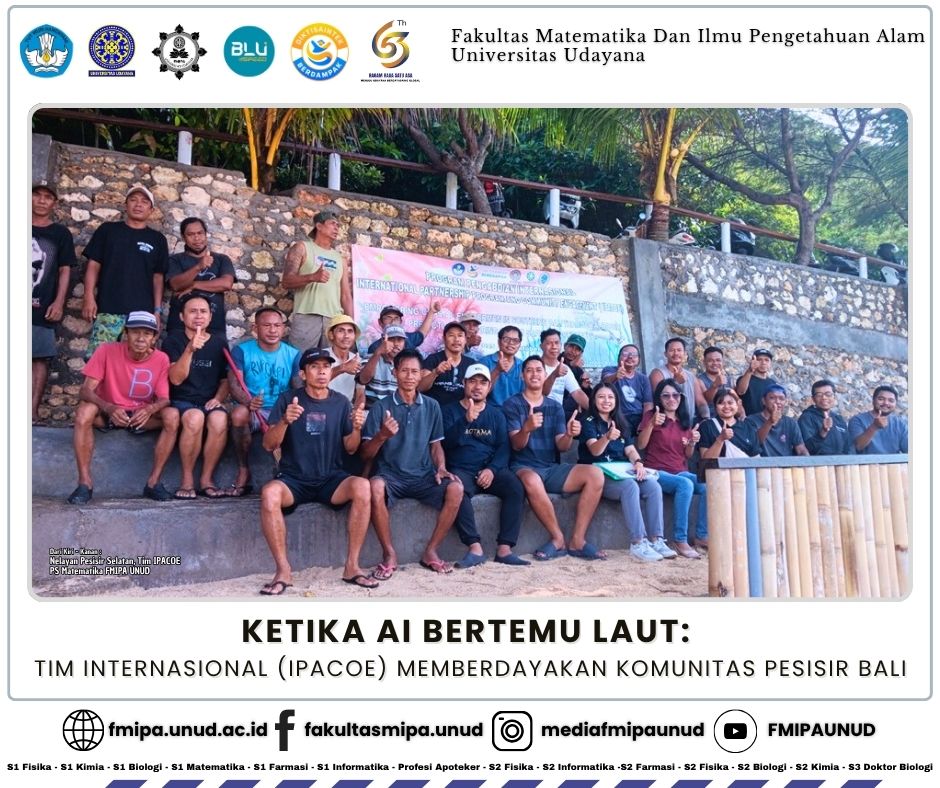
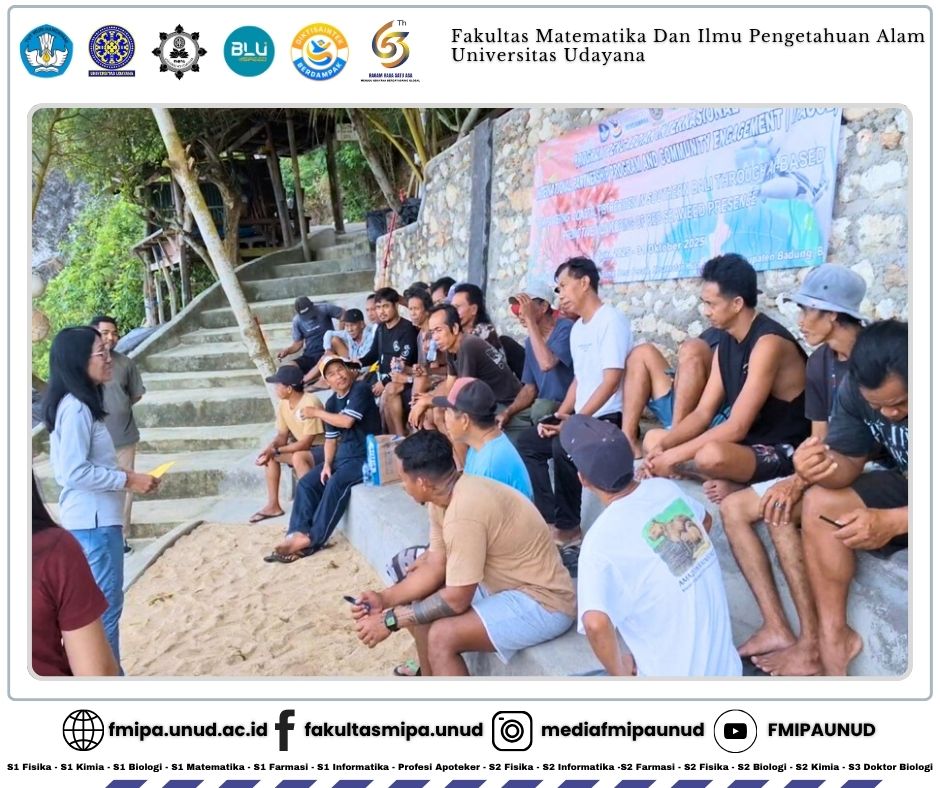
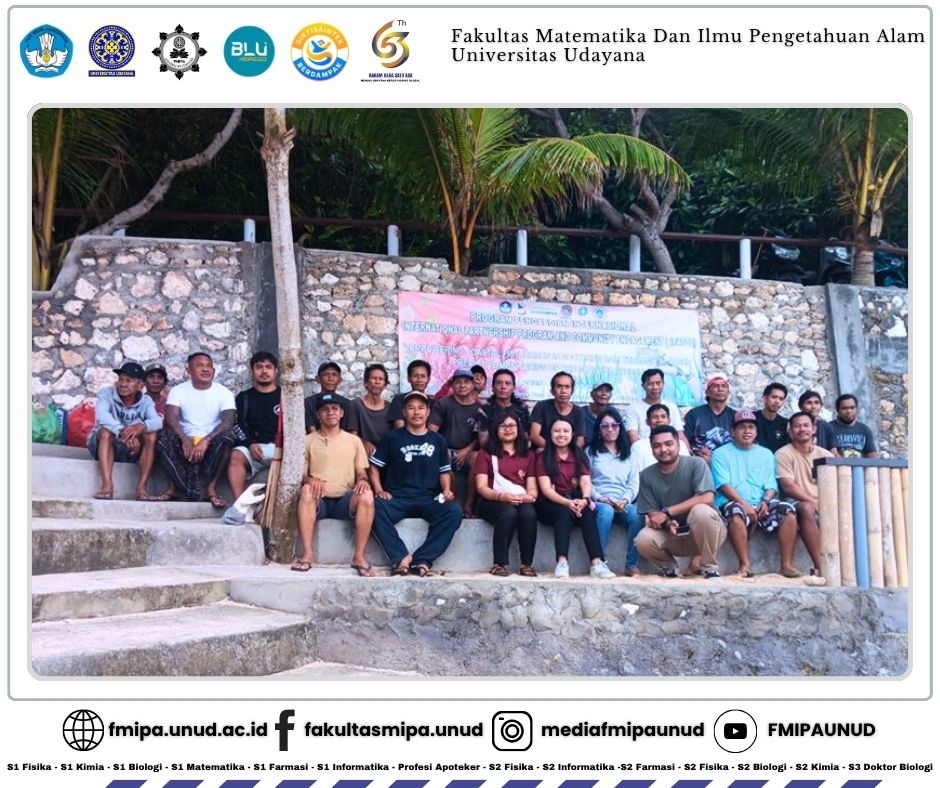
Pecatu, Sunday, October 12, 2025 - The International Partnership and Community Engagement (IPACOE) Program, titled "Empowering Coastal Fishermen in South Bali Through AI-Based Red Seaweed Monitoring and Prediction," aims to empower fishermen on the south coast of Bali through the transfer of machine learning-based research technology that predicts the presence of red macroalgae (Rhodophyta) based on environmental parameters. This program is funded by the Faculty of Mathematics and Natural Sciences, Udayana University, led by Desak Putu Eka Nilakusmawati and her colleagues: I Gusti Ayu Made Srinadi, Ratna Sari Widiastuti, and I Putu Winada Gautama, lecturers in the Mathematics Study Program at Udayana University; Dewa Made Alit Adinugraha (Bali International Polytechnic); and Desak Putu Raka Paramita (Ocean University of China).
The IPACOE program at Nyang-Nyang Beach was implemented from May 2025 to October 2025, with the partner village of Tempekan Bustegeh, Banjar Adat Tengah, Pecatu Village, South Kuta District, Badung Regency, Bali Province, Indonesia. The partner village was represented by I Nyoman Resana, Kelian Tempekan Bustegeh, Lingk, Banjar Adat Tengah, Pecatu Village. The outcome of this activity was relevant and contextual technological innovation. A key milestone was the development of a mobile-based red algae monitoring system, an Android application designed for field use. The application includes a complete workflow: environmental data input (temperature, salinity, pH), data validation, pre-processing, AI modeling (Random Forest/SVM), prediction of algae abundance levels, and visualization of productive locations on a map. The offline mode is invaluable, especially for coastal areas with limited internet connectivity.
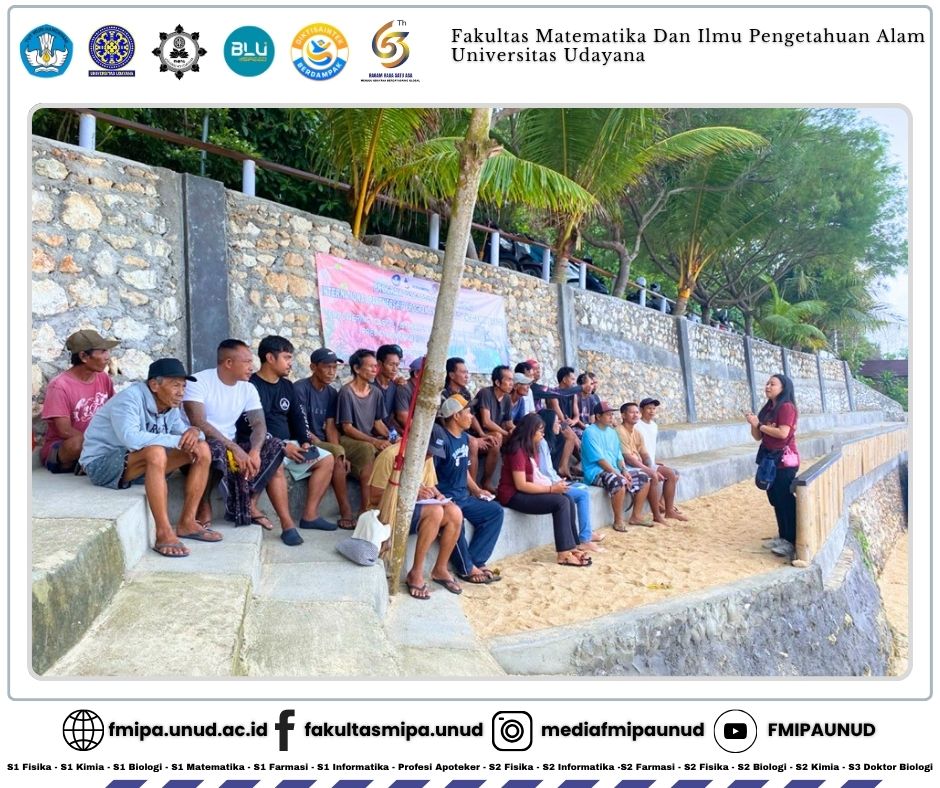
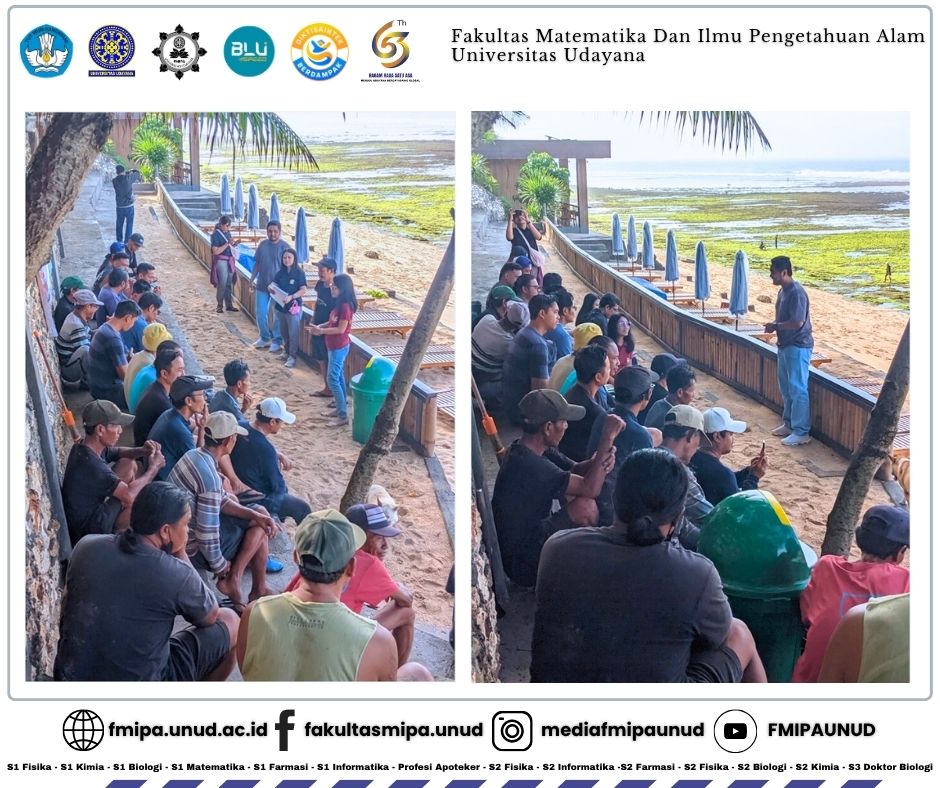
Community empowerment and environmental education were conducted on September 14 and October 12, 2025, with activities such as beach cleanups, promotional signage installation, and public outreach sessions that strengthened the synergy between digital capacity building and environmental management. Community participation in waste management, through the placement of organic and non-organic waste bins and regular shoreline cleanups, demonstrated increased ecological awareness. The program's integration of science and local knowledge successfully bridged modern science through machine learning models and cutting-edge ecological research with the knowledge of traditional fishermen, who typically rely on seasonal cues. Participatory mapping ensured that technology complemented, rather than replaced, the experiences of indigenous communities. The program not only resulted in predictive applications of technology products for red macroalgae presence but also catalyzed social change by improving digital literacy, fostering environmental responsibility, and preparing coastal communities to apply scientific data for sustainable marine resource management.
Gallery
UDAYANA UNIVERSITY